Omniglot News (10/05/26)

Omniglot News

Here’s the latest news from the world of Omniglot.

New language pages:

  • Maonan (Vah kiong naemz), a Kam-Sui language spoken in Guangxi and Guizhou in southern China.
  • Guhu-Samane, a Binanderean language spoken in Morobe Province of Papua New Guinea.
  • Zyphe, a Maraic language spoken the north of Chin State in western Myanmar.
  • Komi-Yazva (коми-ёдз көл), a Permic language spoken in the Perm Krai in the northwest of the Russia Federation.

New numbers pages:

  • Guhu-Samane, a Binanderean language spoken in Morobe Province of Papua New Guinea.
  • Zyphe, a Maraic language spoken in Chin State in western Myanmar.

New idioms page: To lose one’s marbles – idioms meaning you have lost your mind, gone crazy and similar things in various languages.

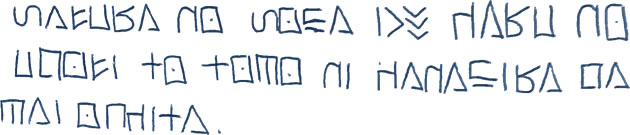
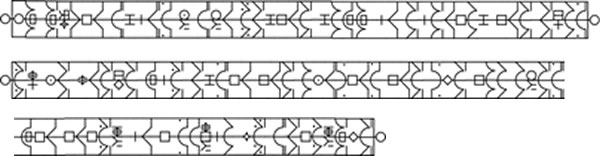
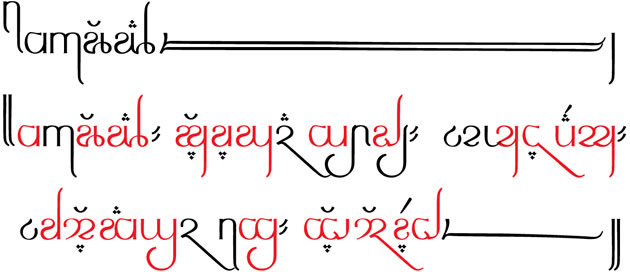
New constructed script: Loopiform, an alternative way to write French and other languages devised by Filipe Reis.

Sample text in Loopiform in French

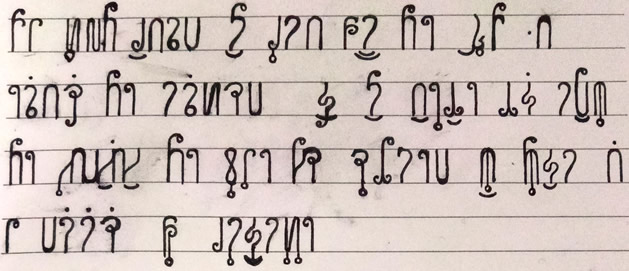
New adapated script: Bodigari (བོ་དེ་གརི), a way to write English with the Tibetan script devised by Ian Bonnycastle.

Sample text in Bodiform in English

In this week’s Adventure in Etymology, Rightly Adroit, we deftly discover the right roots of the word adroit

It’s also available on Instagram and TikTok.

On the Omniglot blog this week there’s a new post entitled Dressed to Pieces, in which we investigate the Japanese word ワンピース (wanpīsu), which means dress or one-piece bathing suit, and related words, and there’s the usual language quiz. See if you guess what language this is:

Here’s a clue: this language is spoken in western Canada.

The mystery language in last week’s language quiz was Qabiao, a Kra language spoken in northern Vietnam and southern China.

On the Celtiadur blog this week there’s a new post entitled A Stack of Heaps about words for heap, pile, stack and related things in Celtic languages.

Improved pages: Komi language page, and made separate pages for Komi-Permyak and
Komi-Zyrian.

I wrote a new song this week called Perdre Le Nord, which was inspired by ways to say that someone has lost their marbles (lost their mind / gone crazy) in French such as perdre le nord (‘to lose the north’).

For more Omniglot News, see:
https://www.omniglot.com/news/
https://www.facebook.com/groups/omniglot/
https://www.facebook.com/profile.php?id=100046466483286

JapanesePod101.com

You can also listen to this podcast on: Apple Podcasts, Amazon Music, TuneIn and Podchaser.

If you would like to support this podcast, you can make a donation via PayPal or Patreon, or contribute to Omniglot in other ways.


Radio Omniglot podcasts are brought to you in association with Blubrry Podcast Hosting, a great place to host your podcasts. Get your first month free with the promo code omniglot.


Adventures in Etymology – Rightly Adroit

In this Adventure in Etymology we deftly discover the right roots of the word adroit.

Marmotte (Marmota marmota) (56)

Adroit [əˈdɹɔɪt] means deft, dexterous or skillful. Related words include adroitness (skillfulness or ease of ability), and maladroit (awkward, clumsy, inept).

It comes from French adroit (skilful, apt, skilled), from à (to) and droit (right, law, right angle), so could be translated as ‘to the right’, and the French phrase à droite means on the right or to the right [source].

A related word in French is adret, which refers to the sun-facing side of a mountain, particularly in the Alps [source].

The somewhat dated German word adrett (neat, tidy, clean-cut) [source] was borrowed from French, and was also borrowed into Danish (via German) to become adræt (agile, nimble) and adræthed (agility) [source].

The French word droit (right, etc) comes from Old French, droit [ˈdɾoi̯t] (justice, right), from Late Latin drictus (straight, right), from Latin dīrēctus (laid straight, direct, straight), from dīrigō (to lay straight, guide, distribute) [source].

Words from the same roots include dirigere (to address, run, manage, direct) in Italian, derecho (straight, right, correct) in Spanish, dyrygować (to conduct, boss around) in Polish, and address and direct in English [source].

If you would like to support this podcast, you can make a donation via PayPal or Patreon, or contribute to Omniglot in other ways.

Radio Omniglot podcasts are brought to you in association with Blubrry Podcast Hosting, a great place to host your podcasts. Get your first month free with the promo code omniglot.

The Fastest Way to Learn Japanese Guaranteed with JapanesePod101.com

I also write about words, etymology and other language-related topics on the Omniglot Blog, and I explore etymological connections between Celtic languages on the Celtiadur blog.


Omniglot News (03/05/26)

Omniglot News

Here’s the latest news from the world of Omniglot.

New language pages:

  • Mundani (Mundàni), a Southern Bantoid language spoken in the Southwest Region of Cameroon.
  • Amuzgo (Ñòmndaá), an Eastern Oto-Manguean language spoken in Guerrero and Oaxaca in southern Mexico.
  • Cuicatec (Dibaku / Dbaku), a Mixtecan language spoken in the northwest of Oaxaca in southern Mexico.

New numbers pages:

  • Saho (Saahot Af), an East Lowland Cushitic language spoken in Eritrea and Ethiopia.
  • Ghomara (žamaεa / ⵖⵓⵎⴰⵔⴰ), a Northern Berber language spoken in northern Morocco.

In this week’s Adventure in Etymology, Frequently Crowded, we uncover the crowded roots of the word frequent.

It’s also available on Instagram and TikTok.

On the Omniglot blog this week there’s a new post entitled Sadly Satisfying Assets, in which we find out what connects the words asset, satisfy and sad, and there’s the usual language quiz. See if you guess what language this is:

Here’s a clue: this language is spoken in northern Vietnam and southern China.

The mystery language in last week’s language quiz was Khinalug (каьтш мицІ) , a Northeast Caucasian language spoken in northern Azerbaijan.

On the Celtiadur blog this week there’s a new post entitled Shearing Fleeces about words for fleece, shearing and related things in Celtic languages..

For more Omniglot News, see:
https://www.omniglot.com/news/
https://www.facebook.com/groups/omniglot/
https://www.facebook.com/profile.php?id=100046466483286

JapanesePod101.com

You can also listen to this podcast on: Apple Podcasts, Amazon Music, TuneIn and Podchaser.

If you would like to support this podcast, you can make a donation via PayPal or Patreon, or contribute to Omniglot in other ways.


Radio Omniglot podcasts are brought to you in association with Blubrry Podcast Hosting, a great place to host your podcasts. Get your first month free with the promo code omniglot.

Adventures in Etymology – Frequently Crowded

In this Adventure in Etymology we uncover the crowded roots of the word frequent.

The Shenzhen Eye of Gangxia North Station

Frequent [ˈfɹiː.kwənt] as an adjective can mean:

  • Done or occuring often – common, regular, recurring.
  • Occurring at short intervals – continual, steady.
  • Addicted to any course of conduct; inclined to indulge in any practice; habitual; persistent.

It used to mean full, crowded or thronged, or often or commonly reported, and as a verb to frequent [fɹɪˈkwɛnt] means to visit often.

It comes from Old French frequent (frequent, often), from Latin frequēns (crowded, filled with a multitude, frequent, repeated), from Proto-Italic *frekʷents, possibly from PIE *bʰrekʷ- (to condense, crowd together) [source].

Words from the same Latin roots include fréquent (frequent) in French, freqüent (frequent, often) in Catalan, frequente (frequent, common) in Portuguese, and frequency in English [source].

Words from the same PIE roots may include farcir (to stuff) in French, harter (to bore, tire, make fed up) in Spanish, hartzitu (to ferment) in Basque, and farce in English [source].

If you would like to support this podcast, you can make a donation via PayPal or Patreon, or contribute to Omniglot in other ways.

Radio Omniglot podcasts are brought to you in association with Blubrry Podcast Hosting, a great place to host your podcasts. Get your first month free with the promo code omniglot.
The Fastest Way to Learn Japanese Guaranteed with JapanesePod101.com

I also write about words, etymology and other language-related topics on the Omniglot Blog, and I explore etymological connections between Celtic languages on the Celtiadur blog.


Omniglot News (26/04/26)

Omniglot News

Here’s the latest news from the world of Omniglot.

New language pages:

  • Mundabli-Mufu (Ngɔ Njan), a Western Beboid language spoken in the North West Region of Cameroon.
  • Wamey (Wameỹ / Koñagi), a Senegambian language spoken in Senegal and Guinea.
  • Faiwol, a Mountain Ok language spoken in Papua New Guinea and Indonesia.

New numbers pages:

  • Wamey, a Senegambian language spoken in Senegal and Guinea.
  • Fataluku, a Trans-New Guinea language spoken on the island of Timor in East Timor and Indonesia.

New constructed script: Chivabwe, an alternative way to write Shona and other languages of Africa created by Duncan Junior Kutya.

Sample words in Chivabwe

In this week’s Adventure in Etymology, Entangled Perplexity, we untangle the perplexing roots of the word perplexity.

It’s also available on Instagram and TikTok.

This week on the Omniglot blog there’s a new post entitled Losing Marbles about ways to say that someone has lost their marbles (gone crazy) in English and French, and there’s the usual language quiz. See if you guess what language this is:

Here’s a clue: this language is spoken in Azerbaijan.

The mystery language in last week’s language quiz was Itzaʼ, a Yucatec Mayan language spoken in the Petén Department in northern Guatemala.

On the Celtiadur blog this week there’s a new post entitled Brittle Fragility about words for brittle, fragile and related things in Celtic languages.

For more Omniglot News, see:
https://www.omniglot.com/news/
https://www.facebook.com/groups/omniglot/
https://www.facebook.com/profile.php?id=100046466483286

JapanesePod101.com

You can also listen to this podcast on: Apple Podcasts, Amazon Music, TuneIn and Podchaser.

If you would like to support this podcast, you can make a donation via PayPal or Patreon, or contribute to Omniglot in other ways.


Radio Omniglot podcasts are brought to you in association with Blubrry Podcast Hosting, a great place to host your podcasts. Get your first month free with the promo code omniglot.

Adventures in Etymology – Entangled Perplexity

In this Adventure in Etymology we untangle the perplexing roots of the word perplexity.

Perplexity

Perplexity [pəˈplɛksɪti / pəɹˈplɛksəti] is:

  • The state or quality of being perplexed (puzzled, confused, bewildered)
  • Something that perplexes.
  • (information theory) A measure of how well a probability distribution or model predicts a sample.

It comes from Middle English perplexite ([a state of] doubt, confusion), from Middle French perplexite (perplexed, uncertain), from Latin perplexitās (perplexity, state of bewilderment, obscurity), from perplexus (entangled, involved, intricate, confused, complicated), from per- (very) and plectēre (to weave, twist), from Proto-Italic *plektō, from PIE *pleḱ- (to fold, weave), from *pel- (to wrap) [source].

Words from the same roots include πλέκω (pléko – to knit, weave, tangle) in Greek, plést (to braid, plait, knit) in Czech, fläta (braid, plait) in Swedish, vlak (flat, place) in Dutch, and flax and flay in English [source].

The English suffix -plex, as in complex, duplex, multiplex, possibly comes from the same roots [source].

If you would like to support this podcast, you can make a donation via PayPal or Patreon, or contribute to Omniglot in other ways.

Radio Omniglot podcasts are brought to you in association with Blubrry Podcast Hosting, a great place to host your podcasts. Get your first month free with the promo code omniglot.
The Fastest Way to Learn Japanese Guaranteed with JapanesePod101.com

I also write about words, etymology and other language-related topics on the Omniglot Blog, and I explore etymological connections between Celtic languages on the Celtiadur blog.


Omniglot News (19/04/26)

Omniglot News

Here’s the latest news from the world of Omniglot.

New language pages:

  • Metaʼ (Mɨta’), an Eastern Grassfields language spoken in the North West Region of Cameroon.
  • Romani Tatar (Romaní Tatarja), a Kipchak Turkic language spoken in northeast Bulgaria and southeast Romania.
  • Kedang (tutuq nanang wela), a Malayo-Polynesian language spoken on Lembata Island in East Nusa Tenggara in eastern Indonesia.
  • Waris, a Trans-New-Guinea language spoken in Sandaun Province of Papua New Guinea and Papua Province in Indonesia.

New numbers pages:

  • Waris, a Trans-New-Guinea language spoken in Papua New Guinea and Indonesia.
  • Oroqun, a Northern Tungusic language spoken in Inner Mongolia and Heilongjiang in northern China.

New constructed script: Urisaiyo, an alternative way to write Japanese, English and other languages created by Eteluptra.

Sample text in Urisayo in Japanese

New constructed script: Stylogic, a phonemic alphabet for English and other languages created by Richard Agnew.

Sample text in Stylogic

This week on the Omniglot blog we explore connections between the words nexus, annex(e) and connection in a post entitled A Nexus of Connections, and there’s the usual language quiz. See if you guess what language this is:

Here’s a clue: this language is spoken in Guatemala.

The mystery language in last week’s language quiz was Tawellemmet (Tawəlləmmət / ⵜⵓⵍⵎⵓⵜ / تَاوَلَّمَّتْ), a Southern Tuareg language spoken in Mali, Niger and Nigeria.

On the Celtiadur blog this week there’s a new post about words for Dukes, duchesses are related things.

Here’s a little song I wrote recently called Reaching For The Sky inspired by idioms meaning to give up or quit such as ‘to throw in the towel’.

Unfortunately I didn’t get round to make a new Adventure in Etymology podcast this week as I was busy with other stuff, and I recorded this news a day early as I’ll be in London on Sunday (19th April) for a concert by the South Korean band Rolling Quartz (롤링쿼츠), which I’m very much looking forward to.

For more Omniglot News, see:
https://www.omniglot.com/news/
https://www.facebook.com/groups/omniglot/
https://www.facebook.com/profile.php?id=100046466483286

JapanesePod101.com

You can also listen to this podcast on: Apple Podcasts, Amazon Music, TuneIn and Podchaser.

If you would like to support this podcast, you can make a donation via PayPal or Patreon, or contribute to Omniglot in other ways.


Radio Omniglot podcasts are brought to you in association with Blubrry Podcast Hosting, a great place to host your podcasts. Get your first month free with the promo code omniglot.

Omniglot News (12/04/26)

Omniglot News

Here’s the latest news from the world of Omniglot.

New language pages:

  • Razihi (Lahjah Rāziḥīt), a South Semitic language spoken in Razihi in the Sa’adah District in northwestern Yemen.
  • Mbuʼ, a Southern Bantoid language spoken in the North West Region of Cameroon.
  • Seimat, an Oceanic language spoken in the Ninigo Islands in Manus Province in northern Papua New Guinea.
  • Waskia, a Madang language spoken in Madang Province in the north east of Papua New Guinea.

New numbers pages:

  • Seimat, an Oceanic language spoken in Manus Province in northern Papua New Guinea.
  • Umatilla (Tamalúut), a Sahaptin language spoken on the Umatilla Reservation in Oregon in the USA.

New idioms page: Throw in the Towel and other ways to say to give up or quit in a variety of languages.

This week’s Adventure in Etymology, Material Matters, uncovers the maternal and woody roots of the words material and matter.

It’s also available on Instagram and TikTok.

This week on the Omniglot blog we consider the usefulness or otherwise of Chocolate Teapots, and there’s the usual language quiz. See if you guess what language this is:

Here’s a clue: this language is spoken in Mali, Niger and Nigeria.

The mystery language in last week’s language quiz was Soqotri (ماتڸ دسقطري), a South Semitic language spoken in the Socotra Archipelago in Yemen.

On the Celtiadur blog this week there’s a new post entitled Thrusting Throws about words for thrust, throw and related things in Celtic languages.

Incidentally, I completed another trip around the sun this week (on Thursday), so I’m now LIV years old, or seksoghalvtreds in Danish.

For more Omniglot News, see:
https://www.omniglot.com/news/
https://www.facebook.com/groups/omniglot/
https://www.facebook.com/profile.php?id=100046466483286

JapanesePod101.com

You can also listen to this podcast on: Apple Podcasts, Amazon Music, TuneIn and Podchaser.

If you would like to support this podcast, you can make a donation via PayPal or Patreon, or contribute to Omniglot in other ways.


Radio Omniglot podcasts are brought to you in association with Blubrry Podcast Hosting, a great place to host your podcasts. Get your first month free with the promo code omniglot.
Adventures in Etymology – Material Matters

This Adventure in Etymology uncovers the maternal and woody roots of the words material and matter.

Central, Hong Kong / 香港中環

Meanings of material include:

  • A basic matter from which the whole or the greater part of something physical is made.
  • Fabric, which can be made into a garments, etc, especially, woven fabric.
  • The elements, constituents or substance of which something is composed of or can be made of.

It comes from Middle English material (material, worldly), from Latin māteriālis (material – made of matter), from māteria (matter, material, substance, timber), from māter (mother, matron, woman), from PIE *méh₂tēr (mother) [source].

Words from the same roots include mattter, maternal, matrix, and mother in English, madre (mother) in Italian, matière (material, matter, subject) in French, madeira (wood) in Portuguese, motër (sister) in Albanian, and modryb (aunt) in Welsh [source].

Incidentally, in Old and Middle English, one word for material (and matter) was andweorc, which comes from and- (against, back, fully), and weorc (work, labour, pain) [source].

This is partially related to the Modern English word handiwork, which comes from Old English handġeweorc (manual labour, something made with the hands) [source].

If you would like to support this podcast, you can make a donation via PayPal or Patreon, or contribute to Omniglot in other ways.

Radio Omniglot podcasts are brought to you in association with Blubrry Podcast Hosting, a great place to host your podcasts. Get your first month free with the promo code omniglot.

The Fastest Way to Learn Japanese Guaranteed with JapanesePod101.com

I also write about words, etymology and other language-related topics on the Omniglot Blog, and I explore etymological connections between Celtic languages on the Celtiadur blog.


Omniglot News (05/04/26)

Omniglot News

Here’s the latest news from the world of Omniglot.

New language pages:

  • Mwesen (M̄ēsēn), a Southern Oceanic language spoken on Vanua Lava Island in northern Vanuatu.
  • Wuvulu-Aua, an Oceanic language spoken on Wuluvu and Aua islands in Manus Province of Papua New Guinea.

New constructed script: Vsrc, an alternative way to write English inspired by the Arabic script created by Juan Euskalduna.

Sample text in the Vsrc script

New numbers page Quiripi, an Eastern Algonquian language that was spoken in Connecticut and Long Island in the USA.

This week on the Omniglot blog there’s a new post entitled Yexing, about the word yex, which means a hiccough / hiccup, burp or belch, and there’s the usual language quiz. See if you guess what language this is:

Here’s a clue: this language is spoken in Yemen.

The mystery language in last week’s language quiz was Patamona, a dialect of Kapóng, a Cariban language spoken in Guyana.

On the Celtiadur blog this week there’s a new post about words for Roses and related things in Celtic languages.

Castell Biwmares / Beaumaris Castle
Castell Biwmares / Beaumaris Castle, one of the places I visited this week

Incidentally, if you’re wondering why there’s less new material on Omniglot this week, it’s because some friends came to visit me, and I didn’t have as much time to work on Omniglot. With one friend from the Netherlands I spoke a mixture of English, Dutch, Welsh, French and Scottish Gaelic, and with another friend I spoke Welsh and English. We also sang songs in Welsh, English, German, Dutch and Scottish Gaelic. So it was a linguistically rich week.

For more Omniglot News, see:
https://www.omniglot.com/news/
https://www.facebook.com/groups/omniglot/
https://www.facebook.com/profile.php?id=100046466483286

JapanesePod101.com

You can also listen to this podcast on: Apple Podcasts, Amazon Music, TuneIn and Podchaser.

If you would like to support this podcast, you can make a donation via PayPal or Patreon, or contribute to Omniglot in other ways.


Radio Omniglot podcasts are brought to you in association with Blubrry Podcast Hosting, a great place to host your podcasts. Get your first month free with the promo code omniglot.