

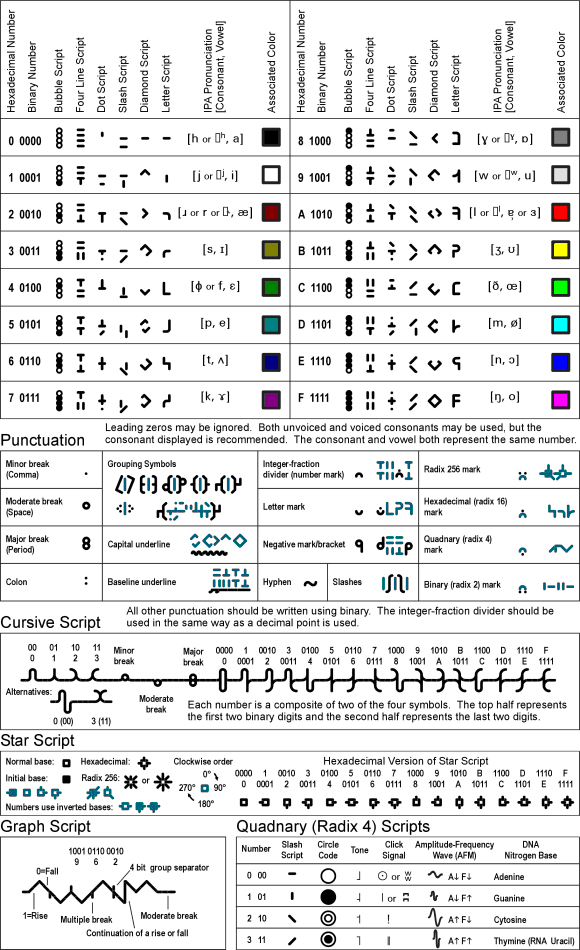
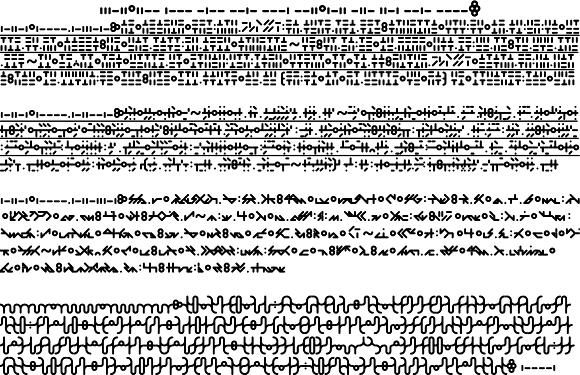
12480 was designed in 2002 by Bradley Tetzlaff from Waukesha, Wisconsin, USA. It was invented for both use in a computer game called Ecclemony (1E78) and as a basis for constructed languages. It was also designed to show how a true alphanumeric* writing system looks and works.
12480 is not based upon phonemes, but rather upon binary. It achieves complete universality with an optimal amount of applications from its binary basis. A writing system based on phonemes will only last as long as the human voice is used. 12480's binary foundation will last as long as numbers exist.
* "Alphanumeric" is used here to describe the combination of an alphabet and a numeral system.
Binary (radix 2), quadnary (radix 4), hexadecimal (radix 16), radix 256, and all other numeral systems based on a power of two. Anything that can be expressed with a numeric value can be written using 12480.
Please note, this page was put together by Bradley Tetzlaff. The views expressed on it are his.
Constructed scripts for: Ainu | Arabic | Chinese languages | Dutch | English | French | Hawaiian | Hungarian | Japanese | Kadazandusun | Korean | Lingala | Malay & Indonesian | Persian | Tagalog / Filipino | Russian | Sanskrit | Spanish | Taino | Turkish | Vietnamese | Welsh | Other natural languages | Colour-based scripts | Tactile scripts | Phonetic/universal scripts | Constructed scripts for constructed languages | Adaptations of existing alphabets | Fictional alphabets | Magical alphabets | A-Z index | How to submit a constructed script
[top]

Note: all links on this site to Amazon.com


You can support this site by Buying Me A Coffee, via PayPal or Patreon, or by contributing in other ways.
If you find all the adverts annoying, there is now an Ad-free version of Omniglot which you can access for a small monthly or annual donation.

This website and its content is copyright of Simon Ager - © Simon Ager 1998-2026. All rights reserved. All images were created by me, unless otherwise indicated. Feel free to use them for personal, educational or non-commercial purposes, and don't forget to mention where they came from. More details about copyright

[top]


