Glagoñol (Ⰳⱉⰰⰳⱁⰾⰹⱌⱏ)
Glagoñol was invented by Rodrigo Bustamante Solano from Costa Rica as a way to write Spanish with the Glagolitic alphabet. He was studying Glagolitic at the time, and thought it could be used as a cool alternative way to write Spanish. He was inspired by Głagolicy (Ⰳⱉⰰⰳⱁⰾⰹⱌⱏ), a way to write Polish with the Glagolitic alphabet.
Glagoñol

Download an alphabet chart for Glagoñol (Excel)
Notes
- Ⱌⱌ is used to represent c within the syllabes ce and ci and even within foreign loanwords, names and surnames being pronounced as ts. Examples: cerebro (brain): ⱌⰵⱃⰵⰱⱃⱁ, cigarro (cigar): ⱌⰻⰳⰰⱃⱃⱁ, tsunami: ⱌⱆⱀⰰⰿⰻ, tsé-tsé (a kind of fly): ⱌⰵ'-ⱌⰵ', Matsumura (Japanese surname): Ⰿⰰⱌⱆⰿⱆⱃⰰ.
- As h is a silent consonant in most of the Spanish vocabulary, it has no equivalent in Glagolitic. Thus, it can be ommited when transcribing Spanish words, names and surnames into Glagolitic. Examples: hombre (man): ⱆⰿⰱⱃⰵ, quehacer (issue, thing): ⰽⰵⰰⱌⰵⱃ, alhambra: ⰰⰾⰰⰿⰱⱃⰰ, Herrera (Spanish surname): Ⰵⱃⱃⰵⱃⰰ, Hilario (Spanish male name): Ⰻⰾⰰⱃⰻⱁ.
- Ⰳⰳ is used to represent g within the syllabes ga (ⰃⰀⰳⰰ), gue (ⰃⰅⰳⰵ), gui (ⰃⰋⰳⰻ), go (ⰃⰑⰳⱁ) and gu (ⰃⰖⰳⱆ). As for the syllabes güe and güi, those are rendered as ⰃⰖⰅ/ⰳⱆⰵ and ⰃⰖⰋ/ⰳⱆⰻ due to the fact that ü has no equivalent in Glagolitic.
- Besides representing Spanish j, Ⱈⱈ can also be used to represent g within the syllabes ge and gi. At the same time, Ⱈⱈ can be used to represent h within foreign loanwords, names and surnames like hobby (ⱈⱁⰱⰱⰻ), Harry (Ⱈⰰⱃⱃⰻ) and Harada (Ⱈⰰⱃⰰⰴⰰ)
- Ⰽⰽ is used to represent k and c when this latter is used within syllabes ca, co and cu and even as final consonant within words like coñac/cognac (ⰽⱁⱀ'ⰰⰽ).
- Besides representing Spanish ll , Ⰼⰼ can also be used to represent j within foreign loanwords, names and surnames like judo (ⰼⱆⰴⱁ), James (Ⰼⰵⰻⰿⱄ) and Jordan (Ⰼⱁⱃⰴⰰⱀ).
- Ⱎⱎ is used to represent sh within foreign loanwords, names and surnames.
- Spanish x is represented as a digraph by combining Ⰽ+Ⱄ/ⰽ+ⱄ (k+s).
- In order to represent Spanish ñ in Glagolitic, an apostrophe must be placed in front of Ⱀⱀ (n), thus resulting in Ⱀ'ⱀ'.
- Glagolitic Ⰻⰻ (i) can be used to represent y when it falls in front or between consonants. Examples: Wendy: Ⱆⰵⱀⰴⰻ, Evelyn: Ⰵⰲⰵⰾⰻⱀ
- In order to represent q within the syllabes que and qui, an apostrophe can be added in front of Ⰽⰽ (k). As a result, que (Ⰽ'Ⰵⰽ'ⰵ) and qui(Ⰽ'Ⰻⰽ'ⰻ) will emerge.
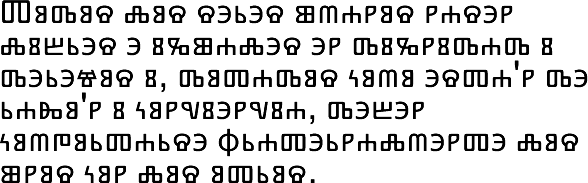
Sample text in Glagoñol
Transliteration
Todos los seres humanos nacen libres e iguales en dignidad y derechos y, dotados como están de razón y conciencia, deben comportarse fraternalmente los unos con los otros.
Translation
All human beings are born free and equal in dignity and rights. They are endowed with reason and conscience and should act towards one another in a spirit of brotherhood.
(Article 1 of the Universal Declaration of Human Rights)
Information about the Glagolitic alphabet
Constructed scripts for: Ainu |
Arabic |
Chinese languages |
Dutch |
English |
French |
Hawaiian |
Hungarian |
Japanese |
Kadazandusun |
Korean |
Lingala |
Malay & Indonesian |
Persian |
Tagalog / Filipino |
Russian |
Sanskrit |
Spanish |
Taino |
Turkish |
Vietnamese |
Welsh |
Other natural languages |
Colour-based scripts |
Tactile scripts |
Phonetic/universal scripts |
Constructed scripts for constructed languages |
Adaptations of existing alphabets |
Fictional alphabets |
Magical alphabets |
A-Z index |
How to submit a constructed script
[top]

Note: all links on this site to Amazon.com , Amazon.co.uk
 and Amazon.fr
 are affiliate links. This means I earn a commission if you click on any of them and buy something. So by clicking on these links you can help to support this site.
You can support this site by Buying Me A Coffee, via PayPal or Patreon, or by contributing in other ways.
If you find all the adverts annoying, there is now an Ad-free version of Omniglot which you can access for a small monthly or annual donation.
This website and its content is copyright of Simon Ager - © Simon Ager 1998-2026. All rights reserved. All images were created by me, unless otherwise indicated. More details

[top]