
Morse Code is named after Samuel F. B. Morse (1791-1872), an American inventor, painter and founder of the National Academy of Design. Along with Alfred Vail (1807-1859) a machinist and inventor, and the physicist Joseph Henry (1797-1878), Morse developed the electromagnetic telegraph and the code that assigns a set of dots and dashes or short and long pulses to each letter of the English alphabet. The first working telegraph was produced in 1836. This made transmission possible over any distance. The first Morse Code message, "What hath God wrought?", was sent from Washington to Baltimore in 1844.
Today experienced operators copy received text without the need to write as they receive, and when transmitting, can easily converse at 20 to 30 words per minute. Morse Code will always remain a viable means of providing highly reliable communications during difficult communications conditions.
Morse Code can be transmitted using sound or light, as sometimes happens between ships at sea. It is used in emergencies to transmit distress signals when no other form of communication is available. The standard international distress signal is •••---••• (SOS)
Since December 2003, Morse Code has included the @ symbol: it is a combination of a and c: •--•-• and is the first change to the system since before World War II.
Morse Code can be used to transmit messages in English and many other languages. This is the current international standard version. Slightly diffferent versions of Morse Code were used in the USA, Germany and elsewhere in the past.
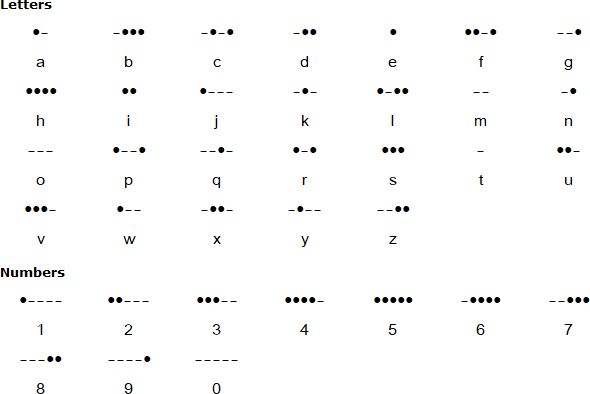
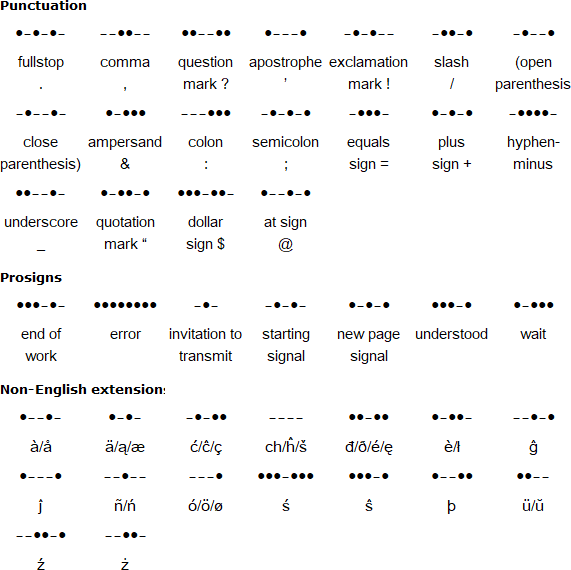
Download a script chart for Morse Code (Excel)
For languages not written with the Latin alphabet other versions of Morse Code are used. There are versions of Morse Code for the Greek, Cyrillic, Arabic and Hebrew alphabets, and for Japanese a version known as Wabun Code (和文モールス符号), which maps kana syllables to specific codes, is used.
The Chinese telegraph code is used to map Chinese characters to four-digit codes and then those digits are sent using standard Morse code. Korean Morse code uses the SKATS (Standard Korean Alphabet Transliteration System) mapping, originally developed to allow Korean to be typed on western typewriters.
.- .-.. .-.. / .... ..- -- .- -. / -... . .. -. --. ... / .- .-. . / -... --- .-. -. / ..-. .-. . . / .- -. -.. / . --.- ..- .- .-.. / .. -. / -.. .. --. -. .. - -.-- / .- -. -.. / .-. .. --. .... - ... .-.-.- / - .... . -.-- / .- .-. . / . -. -.. --- .-- . -.. / .-- .. - .... / .-. . .- ... --- -. / .- -. -.. / -.-. --- -. ... -.-. .. . -. -.-. . / .- -. -.. / ... .... --- ..- .-.. -.. / .- -.-. - / - --- .-- .- .-. -.. ... / --- -. . / .- -. --- - .... . .-. / .. -. / .- / ... .--. .. .-. .. - / --- ..-. / -... .-. --- - .... . .-. .... --- --- -.. .-.-.-
Source: Morse Code Translator
All human beings are born free and equal in dignity and rights.
They are endowed with reason and conscience and should act towards one another in a spirit of brotherhood.
(Article 1 of the Universal Declaration of Human Rights)
Information about Morse Code
http://en.wikipedia.org/wiki/Morse_code
http://en.wikipedia.org/wiki/Other_alphabets_in_Morse_code
http://www.techwholesale.com/morse-code-radios-kids.html
https://ethw.org/Morse_Code
Morse Code Music
http://www.philtulga.com/morse.html
Morse Code Translators and Decoders
https://morsedecoder.com/
https://www.boxentriq.com/code-breaking/morse-code
https://lovemorsecode.com/en
Maritime Signal Flags, Morse code, Semaphore
Page last modified: 23.01.25
[top]

You can support this site by Buying Me A Coffee, and if you like what you see on this page, you can use the buttons below to share it with people you know.

If you like this site and find it useful, you can support it by making a donation via PayPal or Patreon, or by contributing in other ways. Omniglot is how I make my living.
Note: all links on this site to Amazon.com


[top]


