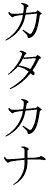
The katakana syllabary was derived from abbreviated Chinese characters used by Buddhist monks to indicate the correct pronunciations of Chinese texts in the 9th century. Apparently the order of the syllables was based on the Siddham script. At first there were many different symbols to represent one syllable of spoken Japanese, but over the years the system was streamlined. By the 14th century, there was a more or less one-to-one correspondence between spoken and written syllables.
The word katakana "part (of kanji) syllabic script". The "part" refers to the fact that katakana characters represent parts of kanji.
The katakana syllabary consists of 48 syllables and was originally considered "men's writing". Since the 20th century, katakana have been used mainly to write non-Chinese loan words, onomatopoeic words, foreign names, in telegrams and for emphasis (the equivalent of bold, italic or upper case text in English). Before the 20th century all foreign loanwords were written with kanji.
Katakana are also used to write Ainu, a language spoken on the northern Japanese island of Hokkaido.
In each column the rōmaji appears on the left, the katakana symbols in the middle and the kanji from which the symbols were derived on the right.
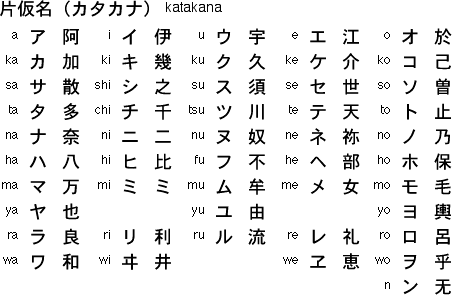
The symbols for 'wi' and 'we' were made obsolete by the Japanese Minsitry of Education in 1946 as part of its language reforms.
The symbols on the right are the basic katakana syllabary in the order they appear in dictionaries and indices (reading from left to right and top to bottom). Additional sounds (the symbols on the right) are represented by diacritics and combinations of symbols.
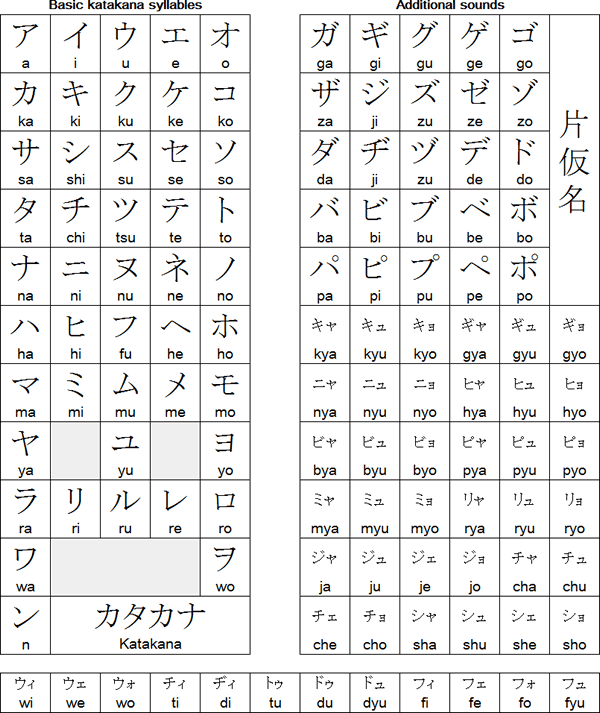

Download this chart in Word, or PDF format (also includes hiragana).
There are more katakana digraphs used to transliterate sounds not covered in the above table [more details].
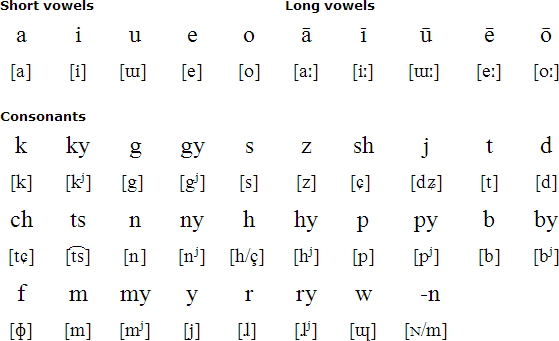
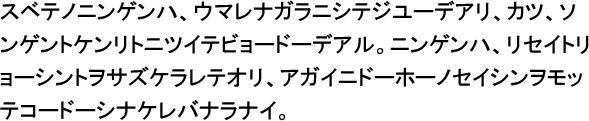

Subete no ningen wa, umarenagara ni shite jiyū de ari, katsu, songen to kenri to ni tsuite byōdō de aru. Ningen wa, risei to ryōshin to o sazukerarete ori, tagai ni dōhō no seishin o motte kōdō shinakereba naranai.
All human beings are born free and equal in dignity and rights. They
are endowed with reason and conscience and should act towards one another
in a spirit of brotherhood.
(Article 1 of the Universal Declaration of Human Rights)
How to write and use Katakana:
Information about Katakana
https://en.wikipedia.org/wiki/Hiragana
https://www.tofugu.com/japanese/learn-hiragana
http://japanesehiragana.org
Introduction to Japanese | Hiragana | Katakana | Kanji | Rōmaji | Phrases (Useful) | Phrases (Silly) | Numbers | Colours | Time | Dates | Family words | Tower of Babel | Articles | Links | Learning materials
Japanese courses and other resources on Amazon
- Find Japanese Tutors with LanguaTalk
Amami, Japanese, Kikai, Miyakoan, Okinawan, Okinoerabu, Tarama, Tokunoshima, Yaeyama, Yonaguni
Bamum, Caroline Island Script, Celtiberian, Cherokee, Cypriot, Dunging (Iban), Eskayan, Hiragana, Iberian, Katakana, Kpelle, Loma, Mende (Kikakui), Mwangwego, Ndjuká, Nüshu, Nwagụ Aneke, Vai, Yi, Yugtun
Page last modified: 15.03.23
[top]

Why not share this page:

If you like this site and find it useful, you can support it by making a donation via PayPal or Patreon, or by contributing in other ways. Omniglot is how I make my living.
Note: all links on this site to Amazon.com


Get a 30-day Free Trial of Amazon Prime (UK)
If you're looking for home or car insurance in the UK, why not try Policy Expert?
[top]