
Dakota is a Siouan language spoken by about 100 people in the USA, and 190 people in Canada. In the USA it is spoken in Upper Sioux, Lower Sioux, Prior Lake and Prairie Island in Minnesota; Fort Peck reservation, Montana; in Santee, Nebraska; in Devils Lake, Standing Rock reservation and Sisseton-Lakota Traverse reservation, North Dakota, and in Crow Creek, Sisseton-Lakota Traverse reservation, Yankton reservation and Flandreau, South Dakota.
In Canada Dakota is spoken in southern Manitoba; and in Oak River and Oak Lake, Long Plain, Standing Buffalo, Birdtail, Stony Wahpeton, and Moose Woods, Saskatchewan.
The majority of Dakota speakers are older adults. Few younger people speak it, preferring English, however efforts are being made to revitalize it, including classes at all levels of education.
There are two main dialects of Dakota: Western Dakota and Eastern Dakota. The dialects differ in vocabulary, pronunciation and grammar, but are mostly mutually intelligible.
Western Dakota (Yankton-Yanktonai / Dakȟóta / Dakhóta) has two sub-dialects: Yankton (Iháŋktȟuŋwaŋ) and Yanktonai (Iháŋktȟuŋwaŋna).
Eastern Dakota (Santee-Sisseton / Dakhóta) also has two sub-dialects: Santee (Isáŋyáthi) and Sisseton (Sisíthuŋwaŋ).
The name "Sioux" is a French version of the Ojibwa word nadewisou, which means "treacherous snakes". The native names for the Sioux mean "An Alliance of Friends", which is Dakhota in the Santee dialect. There are a number of different spellings of these names.
The first alphabet for Sioux, known as Riggs, was devised by the missionaries Samuel and Gideon Pond, Stephen Return Riggs and Dr Thomas S. Williamson in 1834. They based their spelling system on the Santee dialect of Dakota, and used it to translate biblical texts.
A revised version of this system was used in Riggs' Dakota Grammar, published in 1852, and in his Dakota-English dictionary, published in 1890. Since then a number of other Dakota spelling systems have been devised.
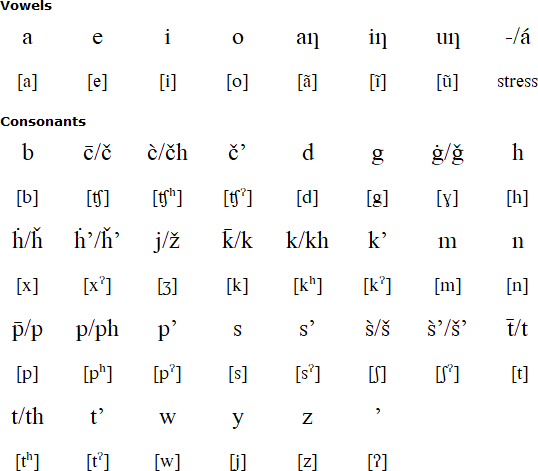
There are several ways to write Dakota Sioux. This chart shows two methods: Albert White Hat's / Saskatchewan Indigenous Cultural Centre (SICC) orthography of 1973, and Jan Ullrich's 1992 orthography. Where they differ, the former is shown on the left, and the latter on the right.
More details about Dakota orthographies
http://www.languagegeek.com/siouan/y_dakota.html
Download an alphabet chart for Dakota (Excel)
Wic̀as̀a waƞ wayei kʼa taḣc̄a num wic̀ao k̄eyap̄iʼ. T̄aƞyena wic̀apat̄e c̀ʼa tado k̄iƞ tas̀uƞk̄e kʼiƞkiye c̀ʼa wana wi kuc̄iyena c̀aƞke t̄iyat̄ak̄iya k̄uyaƞk̄a k̄eyap̄iʼ. Maya waƞ apajejeyena asnik̄iya-iyot̄ak̄a uƞkaƞ akot̄aƞhaƞ wiƞyaƞ waƞ maya-akdakda tahenak̄iya uyaƞk̄a e waƞyak̄ yaƞk̄a keyap̄iʼ. Wana hihuƞni kʼa wic̀as̀a kiƞ isakip̄ hinajiƞ kʼeyas̀ inina yaƞk̄a uƞkaƞ haƞk̄eya kic̀i iyot̄ak̄e cʼa – T̄oke iyemayak̄iyes̀ni se? T̄oka uƞkaƞ inina naƞk̄a ha? – eye c̀ʼa is̀ iya maya k̄iƞ ed hu ġeġeya iyot̄ak̄a k̄eyap̄iʼ.
Wičháša waƞ wayéi kʼa tháȟča núm wičháo kéyápiʼ. Taƞyéna wičháphate čʼa thadó kiƞ thašúƞke kʼiƞkhíye čʼa waná wí khúčiyena čhaƞkhé tiyátakiya kúyaƞka kéyápiʼ. Mayá waƞ aphážežeyena asníkiya-iyotaka uƞkháƞ akhótaƞhaƞ wíƞyaƞ waƞ mayá-akdákda thahénakiya úyaƞka e waƞyák yaƞká kéyápiʼ. Waná hihúƞni kʼa wičháša kiƞ isákhip hinážiƞ kʼéyaš inína yaƞká uƞkháƞ haƞkéya kičhí íyotake čʼa – Tokhe iyémayakiyešni se? Tókha uƞkháƞ inína naƞká he? – eyé čʼa íš iyá mayá kiƞ éd hú ǧéǧeya íyotaka kéyápiʼ.
Part of a story called "The Deer Woman" written down by Ella Deloria
Hear a recording of this text by Jared Lanz
Source: http://www.languagegeek.com/siouan/y_dakotastory.html - shows the same text in a number of different spelling systems
Information about Dakota | Numbers | Tower of Babel | Dakota and Lakota learning materials
Information about Sioux languages
https://en.wikipedia.org/wiki/Dakota_language
https://www.ethnologue.com/language/dak/23
http://www.native-languages.org/dakota.htm
Online Sioux language lessons
http://www.beginningdakota.org/
http://www.nativeshop.org/learn-dakota.html
Online Sioux dicionaries
https://fmp.cla.umn.edu/dakota/
https://archive.org/details/adakotaenglishd00rigggoog
Assiniboine, Biloxi, Chiwere, Crow, Dakota, Hidatsa, Ho-Chunk (Winnebago), Lakota, Mandan, Omaha, Osage, Quapaw, Stoney, Tutelo
Languages written with the Latin alphabet
Page last modified: 01.06.25
[top]

You can support this site by Buying Me A Coffee, and if you like what you see on this page, you can use the buttons below to share it with people you know.

If you like this site and find it useful, you can support it by making a donation via PayPal or Patreon, or by contributing in other ways. Omniglot is how I make my living.

Note: all links on this site to Amazon.com


[top]


