
Old English was the West Germanic language spoken in the area now known as England between the 5th and 11th centuries. Speakers of Old English called their language Englisc, themselves Angle, Angelcynn or Angelfolc and their home Angelcynn or Englaland.
Old English began to appear in writing during the early 8th century. Most texts were written in West Saxon, one of the four main dialects. The other dialects were Mercian, Northumbrian and Kentish.
The Anglo-Saxons adopted the styles of script used by Irish missionaries, such as Insular half-uncial, which was used for books in Latin. A less formal version of minuscule was used for to write both Latin and Old English. From the 10th century Anglo-Saxon scribes began to use Caroline Minuscule for Latin while continuing to write Old English in Insular minuscule. Thereafter Old English script was increasingly influenced by Caroline Minuscule even though it retained a number of distinctive Insular letter-forms.
Old English / Anglo-Saxon was first written with a version of the Runic alphabet known as Anglo-Saxon or Anglo-Frisian runes, or futhorc/fuþorc. This alphabet was an extended version of Elder Futhark with between 26 and 33 letters. Anglo-Saxon runes were used probably from the 5th century AD until about the 10th century. They started to be replaced by the Latin alphabet from the 7th century, and after the 9th century the runes were used mainly in manuscripts and were mainly of interest to antiquarians. Their use ceased not long after the Norman conquest.
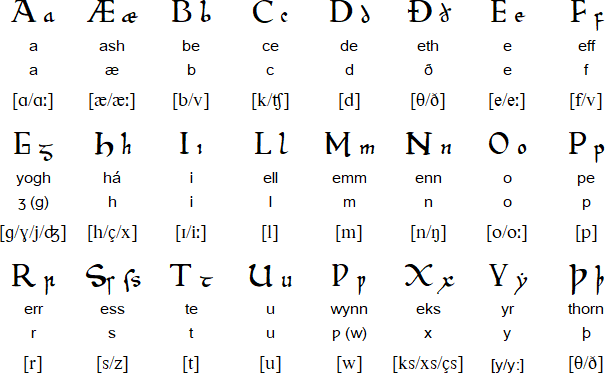
Archaic Latin alphabet, Basque-style lettering, Carolingian Minuscule, Classical Latin alphabet, Fraktur, Gaelic script, Merovingian, Modern Latin alphabet, Roman Cursive, Rustic Capitals, Old English, Sütterlin, Visigothic Script
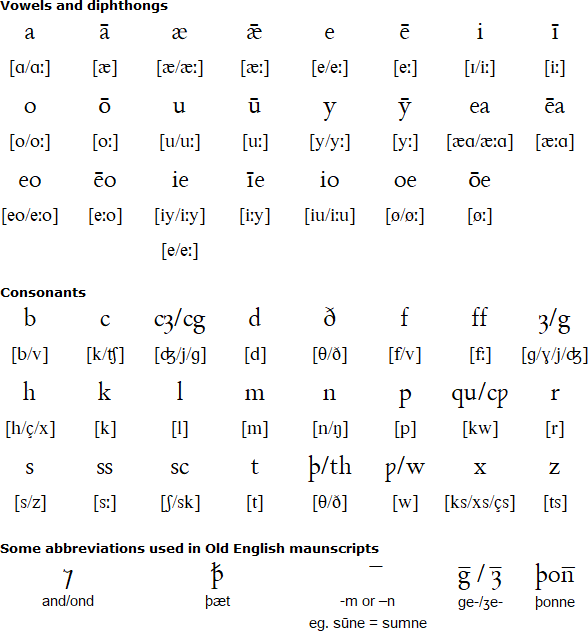
Download an alphabet chart for Old English (Excel speadsheet)
Hear how to pronounce Old English:
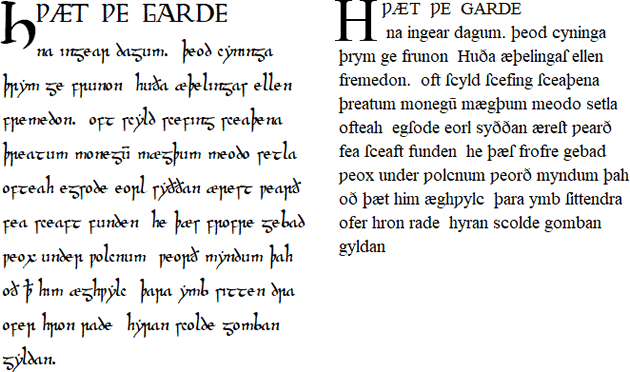
Note: this text is based on an original manuscript of Beowulf The spacing between the words and letters may differ from other versions of the text. It is shown in an Old English font on the left (Beowulf) and a modern font on the right.
LO, praise of the prowess of people-kings
of spear-armed Danes, in days long sped,
we have heard, and what honor the athelings won!
Oft Scyld the Scefing from squadroned foes,
from many a tribe, the mead-bench tore,
awing the earls. Since erst he lay
friendless, a foundling, fate repaid him:
for he waxed under welkin, in wealth he throve,
till before him the folk, both far and near,
who house by the whale-path, heard his mandate,
gave him gifts:
A recording of this text:
You can also find the whole of the Beowulf story, with recording, at: http://ebeowulf.uky.edu/ebeo4.0/CD/main.html
Ealle menn sindon āre and rihtes efen ġeboren, and frēo. Him sindon ġiefeþe ġerād and inġehyġd, and hī sċulon dōn tō ōþrum on brōþorsċipes fēore.
Translation and recording by E. D. Hayes
Another version of this text by Aram Nersesian in the Old English alphabet:
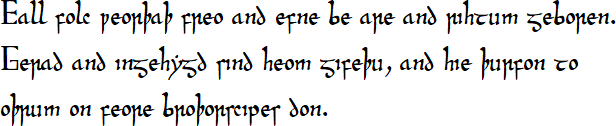
Eall folc weorþaþ frēo and efne bē āre and rihtum ġeboren. Ġerād and inġehyġd sind heom ġifeþu, and hīe þurfon tō ōþrum ōn fēore brōþorsċipes dōn.
Another version of this text by Japser, provided by Corey Murray:
Ealle menn sindon frēo and ġelīċe on āre and ġerihtum ġeboren. Hīe sindon witt and inġehygde ġetīðod, and hīe sċulon mid brōþorlīċum ferhþe tō heora selfes dōn.
ᛠᛚᛖ᛬ᛗᛖᚾ᛬ᛋᛁᚾᛞᚩᚾ᛬ᚠᚱᛖᚩ᛬ᚪᚾᛞ᛬ᚷᛖᛚᛁᚳᛖ᛬ᚩᚾ᛬ᚪᚱᛖ᛬ᚪᚾᛞ᛬ᚷᛖᚱᛁᛇᛏᚢᛗ᛬ᚷᛖᛒᚩᚱᛖᚾ᛬ᚻᛁᛖ᛬ᛋᛁᚾᛞᚩᚾ᛬ᚹᛁᛏ᛬ᚪᚾᛞ᛬ᛁᚾᚷᛖᚻᚣᚷᛞᛖ᛬ᚷᛖᛏᛁᚦᚩᛞ᛬ᚪᚾᛞ᛬ᚻᛁᛖ᛬ᛋᚳᚢᛚᚩᚾ᛬ᛗᛁᛞ᛬ᛒᚱᚩᚦᚩᚱᛚᛁᚳᚢᛗ᛬ᚠᛖᚱᚻᚦᛖ᛬ᛏᚩ᛬ᚻᛖᚩᚱᚪ᛬ᛋᛖᛚᚠᛖᛋ᛬ᛞᚩᚾ
All human beings are born free and equal in dignity and rights. They are endowed with reason and conscience and should act towards one another in a spirit of brotherhood.
(Article 1 of the Universal Declaration of Human Rights)
Information about Old English | Phrases | Numbers | Tower of Babel | Books and learning materials
Information provided by Niall Killoran
Information about Old English
https://en.wikipedia.org/wiki/Old_English
https://www.britannica.com/topic/Old-English-language
https://oldenglish.info/
https://ancientlanguage.com/old-english/
https://www.thehistoryofenglish.com/history_old.html
https://lrc.la.utexas.edu/eieol/engol
Old English lessons
http://www.jebbo.co.uk/learn-oe/contents.htm
http://www.youtube.com/playlist?list=PL9664A1E483AFCD12
https://www.youtube.com/channel/UCLnwScGuOxVlaN5aV9in9ag
Old English phrases
http://en.wikibooks.org/wiki/Old_English/Phrases
http://speaksaxon.blogspot.co.uk
http://en.wiktionary.org/wiki/Appendix:Old_English_phrasebook#Old English
https://babblelingua.com/useful-phrases-in-old-english/
Old English dictionaries
http://lexicon.ff.cuni.cz/app/
http://oldenglishthesaurus.arts.gla.ac.uk/aboutoeonline.html
Old English - Modern English translator
http://www.oldenglishtranslator.co.uk
Ða Engliscan Gesiðas - the society for people interested in all aspects of Anglo-Saxon language and culture: http://tha-engliscan-gesithas.org.uk/
Beowulf in Hypertext
http://www.humanities.mcmaster.ca/~beowulf/
Recordings of Old English texts
https://www.youtube.com/channel/UCc4039hpZ8rnV2ed9F2zPWg
ALPHABETUM - a Unicode font
for ancient scripts, including Classical & Medieval Latin, Ancient Greek, Etruscan, Oscan, Umbrian, Faliscan, Messapic, Picene, Iberian, Celtiberian, Gothic, Runic, Old & Middle English, Hebrew, Sanskrit, Old Nordic, Ogham, Kharosthi, Glagolitic, Anatolian scripts, Phoenician, Brahmi, Imperial Aramaic, Old Turkic, Old Permic, Ugaritic, Linear B, Phaistos Disc, Meroitic, Coptic, Cypriot and Avestan.
https://www.typofonts.com/alphabetum.html
Afrikaans, Alsatian, Bavarian, Cimbrian, Danish, Dutch, Elfdalian, English, Faroese, Flemish, Frisian (East), Frisian (North), Frisian (Saterland), Frisian (West), German, Gothic, Gottscheerish, Gronings, Hunsrik, Icelandic, Limburgish, Low German, Luxembourgish, Mòcheno, Norn, Norwegian, Old English, Old Norse, Pennsylvania German, Ripuarian, Scots, Shetland(ic), Stellingwarfs, Swabian, Swedish, Swiss German, Transylvanian Saxon, Värmlandic, Wymysorys, Yiddish, Yola, Zeelandic
Languages written with the Latin alphabet
Page last modified: 08.05.24
[top]

You can support this site by Buying Me A Coffee, and if you like what you see on this page, you can use the buttons below to share it with people you know.

If you like this site and find it useful, you can support it by making a donation via PayPal or Patreon, or by contributing in other ways. Omniglot is how I make my living.

Note: all links on this site to Amazon.com


[top]


