
The Parthian script developed from the Aramaic script around the 2nd century BC and was used during the Parthian and Sassanian periods of the Persian empire. The latest known inscription dates from 292 AD. It is also known as Inscriptional Parthian, as was mainly used for inscriptions on clay tablets and coins.
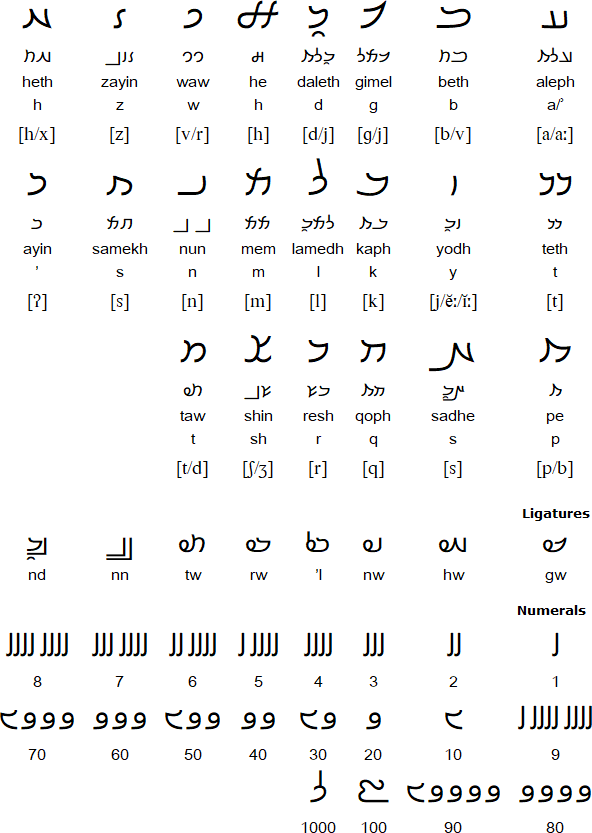
Download an alphabet chart for Parthian (Excel)

By Unknown author - Oriental Institute, Public Domain, Link
Information about Parthian
http://en.wikipedia.org/wiki/Parthian_language
https://en.wikipedia.org/wiki/Inscriptional_Parthian
http://www.iranchamber.com/history/articles/parthian_history_language.php
http://www.parthia.com/parthia_language.htm
https://www.unicode.org/L2/L2007/07207r-n3286r-parthian-pahlavi.pdf
Circle of Ancient Iranian Studies at the School of Oriental and Asian Studies (SOAS), University of London: http://www.cais-soas.com
Avestan, Bactrian Baluchi, Bartangi, Dari, Gilaki, Hazaragi, Ishkashimi, Judeo-Persian, Juhuri, Khufi, Kumzari, Kurdish, Luri, Mazandarani, Munji, Ossetian, Ormuri, Oroshor, Persian, Parthian, Pashto, Rushani, Sanglechi, Sarikoli, Shabaki, Shughni, Tajik, Talysh, Tat, Wakhi, Wanetsi, Yaghnobi, Yazghulami, Yidgha, Zazaki
Ancient Berber, Arabic, Aramaic, Chorasmian, Elymaic, Hatran, Hebrew, Manichaean, Nabataean, North Arabian, Pahlavi, Palmyrene, Parthian, Phoenician, Paleo-Hebrew, Proto-Sinaitic / Proto-Canaanite, Psalter, Punic, Sabaean, Samaritan, Sogdian, South Arabian, Syriac, Tifinagh, Ugaritic
Page last modified: 10.06.24
[top]

Note: all links on this site to Amazon.com


You can support this site by Buying Me A Coffee, via PayPal or Patreon, or by contributing in other ways.
If you find all the adverts annoying, there is now an Ad-free version of Omniglot which you can access for a small monthly or annual donation.

This website and its content is copyright of Simon Ager - © Simon Ager 1998-2026. All rights reserved. All images were created by me, unless otherwise indicated. More details

[top]


