

The Kaithi script developed from the Gupta script and was used from at least the 16th century to write a number of languages, including Bhojpuri, Maghadi, Urdu, Awadhi, Maithili and Bengali.
During the British colonial period the use of Kaithi was discouraged, except in Bihar, where it was made the official script of government offices and courts. As a result it is also known as the Bihar script. Elsewhere it was used mainly by the Kayastha, a Brahmin caste made up mainly of scribes and clerks, and the name Kaithi is derived from Kayastha, which means 'scribe' in Sanskrit.
Until the early 20th century Kaithi was widely used, but since then it has been largely replaced by Devanagari or other scripts, although it is apparently used to some extent in personal correspondence in rural areas.
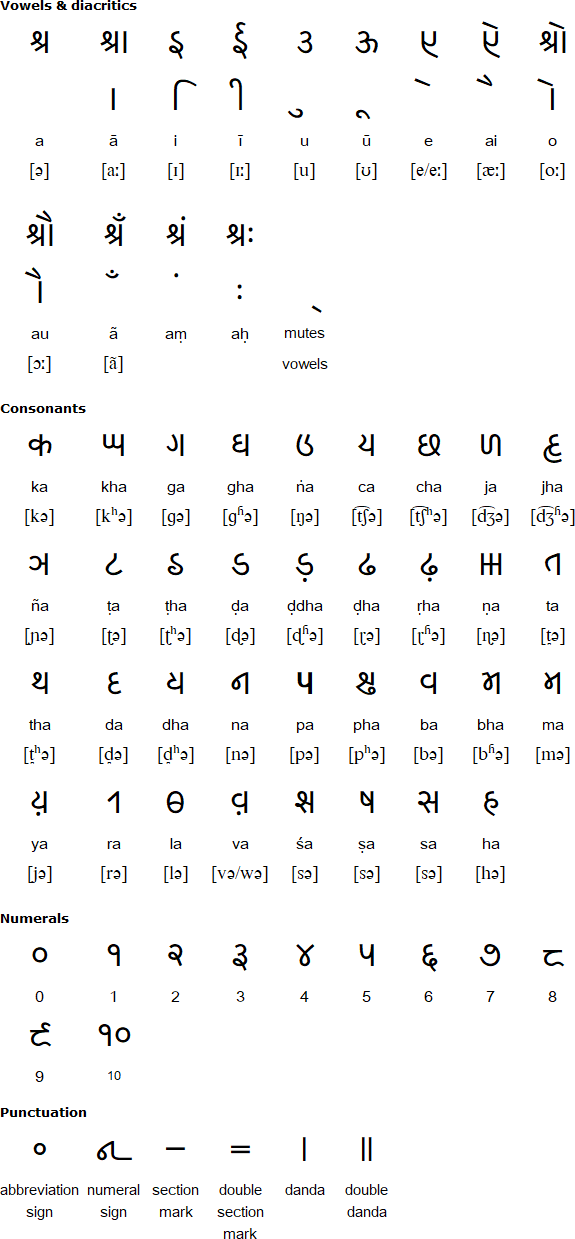
The pronunciation shown here is for Magahi.
Download an alphabet chart of Kaithi (Excel)
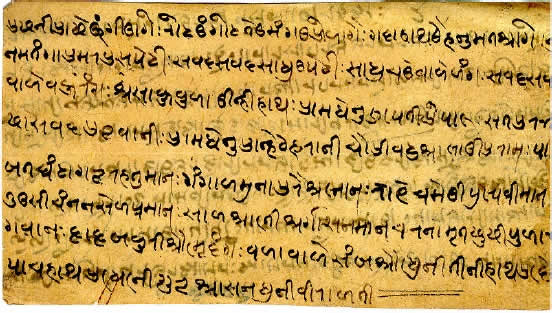
Source: http://www.scribd.com/doc/52997045/Stotra-in-Kaithi-Script-Rajendra
𑂉𑂏𑂷 𑂮𑂴𑂧 𑂃𑂣𑂢 𑂮𑂥 𑂡𑂢-𑂮𑂧𑂹𑂣𑂞𑂹 𑂥𑂵𑂒 𑂍𑂵 𑂮𑂷𑂢𑂰 𑂍𑂲𑂢𑂪𑂅, 𑂃𑂫𑂩 𑂋𑂍𑂩𑂰 𑂈'𑂏𑂪𑂰 𑂍𑂵 𑂆𑂀𑂗𑂰 𑂢𑂲𑂨𑂩 𑂥𑂢𑂰 𑂍𑂵 𑂡𑂩𑂞𑂲 𑂧𑂵𑂀 𑂏𑂰𑂚 𑂍𑂵 𑂩𑂷𑂔 𑂋𑂍𑂩 𑂣𑂯𑂩𑂰 𑂡𑂵 𑂯𑂪𑂅.
Egō sūm apan sab dhan-sampat bēch-ke sōnā kinalaī, awar okara u' galā-ke īṅtā niyar bana-ke dharati-mēṅ gāṇ-ke rōj ōkar paharā dē-halaī.
A-certain miser his-own all wealth-property having-sold gold bought, and it he having-melted a-brick like having-made the-ground-in having-buried (every)-day of-it guarding used-to-give.
Details provided by Biswajit Mandal (biswajitmandal[dot]bm90[at]gmail[dot]com)
Information about Kaithi
https://en.wikipedia.org/wiki/Kaithi
http://scriptsource.org/cms/scripts/page.php?item_id=script_detail&uid=fhadc85hgh
http://en.wikipedia.org/wiki/Kaithi
http://unicode.org/charts/PDF/U11080.pdf
Kaithi font
http://www.fontineed.com/font/KaithiOTS
Ahom, Aima, Arleng, Badagu, Badlit, Basahan, Balinese, Balti-A, Balti-B, Batak, Baybayin, Bengali, Bhaiksuki, Bhujimol, Bilang-bilang, Bima, Blackfoot, Brahmi, Buhid, Burmese, Carrier, Chakma, Cham, Cree, Dehong Dai, Devanagari, Dham Lipi, Dhankari / Sirmauri, Ditema, Dives Akuru, Dogra, Ethiopic, Evēla Akuru, Fox, Fraser, Gond, Goykanadi, Grantha, Gujarati, Gunjala Gondi, Gupta, Gurmukhi, Halbi Lipi, Hanifi, Hanuno'o, Hočąk, Ibalnan, Incung, Inuktitut, Jaunsari Takri, Javanese, Kaithi, Kadamba, Kamarupi, Kannada, Kawi, Kharosthi, Khema, Khe Prih, Khmer, Khojki, Khudabadi, Kirat Rai, Kōchi, Komering, Kulitan, Kurukh Banna, Lampung, Lanna, Lao, Lepcha, Limbu, Lontara/Makasar, Lota Ende, Magar Akkha, Mahajani, Malayalam, Meitei (Modern), Manpuri (Old), Marchen, Meetei Yelhou Mayek, Meroïtic, Masarm Gondi, Modi, Mon, Mongolian Horizontal Square Script, Multani, Nandinagari, Newa, New Tai Lue, Ojibwe, Odia, Ogan, Pahawh Hmong, Pallava, Phags-pa, Purva Licchavi, Qiang / Rma, Ranjana, Rejang (Kaganga), Sasak, Savara, Satera Jontal, Shan, Sharda, Siddham, Sinhala, Sorang Sompeng, Sourashtra, Soyombo, Sukhothai, Sundanese, Syloti Nagri, Tagbanwa, Takri, Tamil, Tanchangya (Ka-Pat), Tani, Thaana, Telugu, Thai, Tibetan, Tigalari, Tikamuli, Tocharian, Tolong Siki, Vatteluttu, Warang Citi
Page last modified: 16.03.23
[top]

Why not share this page:

If you like this site and find it useful, you can support it by making a donation via PayPal or Patreon, or by contributing in other ways. Omniglot is how I make my living.
Note: all links on this site to Amazon.com


Get a 30-day Free Trial of Amazon Prime (UK)
[top]


