

Lepcha is a Tibeto-Burman language spoken in parts of India, Nepal and Bhutan by about 66,730 people. In 2011 there were 47,300 Lepcha speakers in Dzongu district of Sikkim state, and in Kalimpong and Darjeeling in West Bengal in the north east of India. There were 11,700 Lepcha speakers in Samtse district of southwestern Bhutan in 2013, and there were 7,730 speakers of Lepcha in the Ilam district in the southeast of Nepal in 2011.
Lepcha is also known as Lapche, Nünpa, Rongke, Rongpa, Róng, Róng-ríng or Róngkup. The name Lepcha comes from a Nepali term meaning "inarticulate speech". Lepcha speakers call their language ᰛᰩᰵᰛᰧᰵᰶ (róngríng - "language of the Róng) and themselves ᰛᰩᰵᰀᰪᰱ (róngkup - "children of the Róng"). The Lepcha script is known as ᰀᰂ (kakha - the first two letters), ᰇᰨᰕᰧᰵᰶ (chomíng - "written letters") or ᰕᰧᰵᰶᰙᰳ (míngzât - "treasure of letters").
Lepcha is used in newspapers, magazines, textbooks, collections of poetry, prose and plays. The language is also taught in primary schools in India, and is one of eleven offical languages in Sikkim.
According to Lepcha tradition, the Lepcha script was invented by the Lepcha scholar Thikúng Mensalóng (ᰋᰧᰀᰫᰵ ᰕᰬᰰᰠᰜᰩᰵ) sometime during the 17th century. The inventor of the script was probably inspired by Buddhist missionaries. Another theory is that the script developed during the early years of the 18th century. The first printed text in Lepcha, a translation of the Gospel of St. Matthew, was published in 1845.
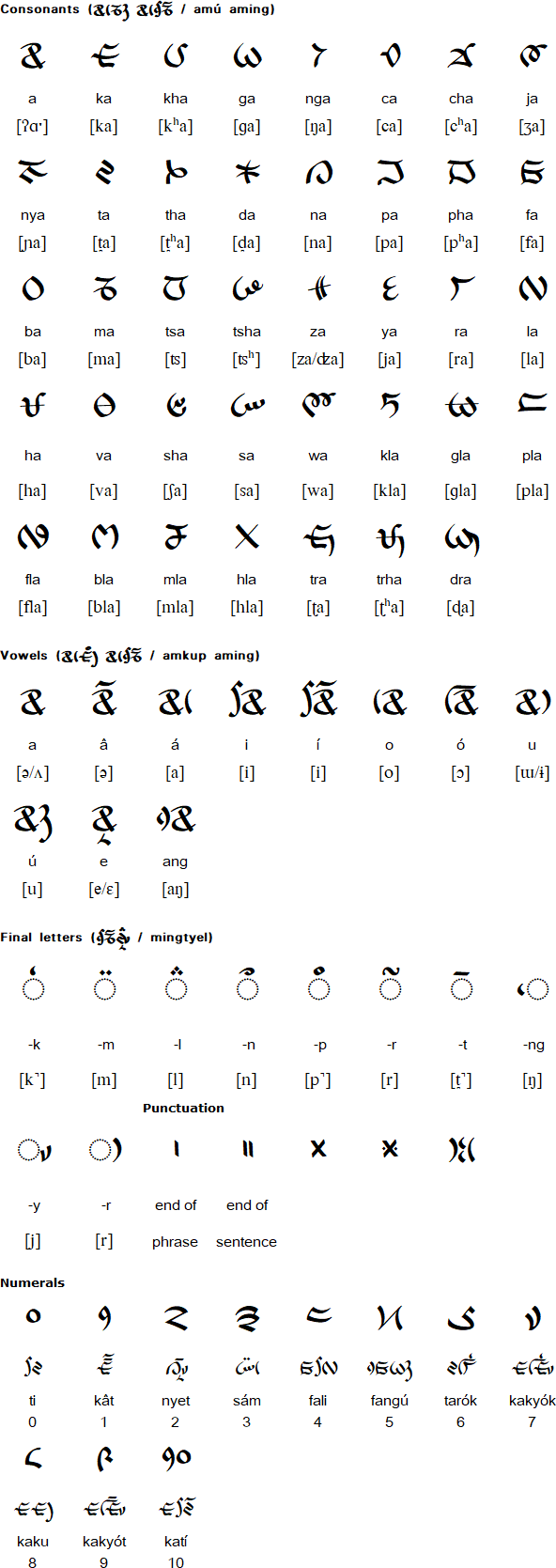
Download an alphabet chart for Lepcha (Excel)
Hear the consonants:
Hear the vowels:
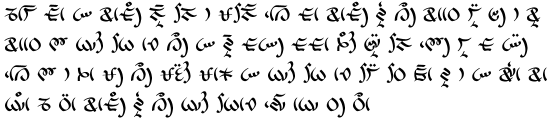
Information about Lepcha | Numbers
Information about the Lepcha (Róng) language and culture
http://en.wikipedia.org/wiki/Lepcha_language
http://en.wikipedia.org/wiki/Lepcha_alphabet
https://www.ethnologue.com/language/lep
https://www.endangeredalphabets.net/alphabets/rong/
https://scriptsource.org/cms/scripts/page.php?item_id=script_detail&key=Lepc
http://www.lepcha.info
A Grammar of Lepcha
Online Lepcha dictionary
http://archive.org/details/cu31924023194198
Lepcha fonts
http://www.siblac.org/lepcha_script.html
https://software.sil.org/mingzat/
Arakanese, Balti, Chocha Ngacha, Drung, Hajong, Hmar, Jingpho, Lepcha, Lhao Vo, Lhomi, Magar, Manipuri, Mro, Naxi, Newar, Pahari, Tangkhul Naga, Tujia, Yolmo
Ahom, Aima, Arleng, Badagu, Badlit, Basahan, Balinese, Balti-A, Balti-B, Batak, Baybayin, Bengali, Bhaiksuki, Bhujimol, Bilang-bilang, Bima, Blackfoot, Brahmi, Buhid, Burmese, Carrier, Chakma, Cham, Cree, Dehong Dai, Devanagari, Dham Lipi, Dhankari / Sirmauri, Ditema, Dives Akuru, Dogra, Ethiopic, Evēla Akuru, Fox, Fraser, Gond, Goykanadi, Grantha, Gujarati, Gunjala Gondi, Gupta, Gurmukhi, Halbi Lipi, Hanifi, Hanuno'o, Hočąk, Ibalnan, Incung, Inuktitut, Jaunsari Takri, Javanese, Kaithi, Kadamba, Kamarupi, Kannada, Kawi, Kharosthi, Khema, Khe Prih, Khmer, Khojki, Khom Thai, Khudabadi, Kirat Rai, Kōchi, Kodava Lipi, Komering, Kulitan, Kurukh Banna, Lai Tay (Tai Yo), Lampung, Lanna, Lao, Leke, Lepcha, Limbu, Lontara/Makasar, Lota Ende, Magar Akkha, Mahajani, Malayalam, Meitei (Modern), Manpuri (Old), Marchen, Meetei Yelhou Mayek, Meroïtic, Masarm Gondi, Modi, Mon, Mongolian Horizontal Square Script, Multani, Nandinagari, Newa, New Tai Lue, Ojibwe, Odia, Ogan, Pahawh Hmong, Pallava, Phags-pa, Purva Licchavi, Qiang / Rma, Ranjana, Rejang (Kaganga), Sasak, Savara, Satera Jontal, Shan, Sharda, Sheek Bakrii Saphaloo, Siddham, Sinhala, Sorang Sompeng, Sourashtra, Soyombo, Sukhothai, Sundanese, Syloti Nagri, Tagbanwa, Tai Noi, Takri, Tamil, Tanchangya (Ka-Pat), Tani, Thaana, Telugu, Thai, Thirke, Tibetan, Tigalari, Tikamuli, Tocharian, Tolong Siki, Vatteluttu, Warang Citi
Page last modified: 01.05.24
[top]

You can support this site by Buying Me A Coffee, and if you like what you see on this page, you can use the buttons below to share it with people you know.

If you like this site and find it useful, you can support it by making a donation via PayPal or Patreon, or by contributing in other ways. Omniglot is how I make my living.

Note: all links on this site to Amazon.com


[top]


